Discovery and burial of Akhtem’s body
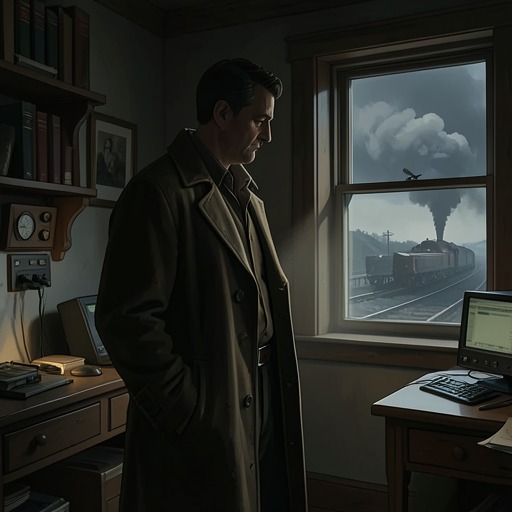
Grey BeesThe discovery and burial of Akhtem’s body bring an end to twenty months of uncertainty for his family, but not to the questions surrounding his disappearance and death. Sergeyich learns that Akhtem was found buried in the woods, learns that his own trip to Simferopol helped secure the body’s return, and attends a funeral at which he is present as a friend yet feels like a bee in an unfamiliar hive. The event turns an unresolved disappearance into a communal act of mourning while leaving its political and personal consequences unsettled.
Disappearance and the search for answers
Akhtem had been missing for twenty months when Sergeyich first reached his family’s home. Akhtem’s wife, Aisylu, told him that he had been taken. Her account placed the disappearance among a series of three abductions: Akhtem and two others had travelled together to the mosque in Bakhchysarai, and their car was later found empty. A boy had reportedly seen the men being pushed into a minibus. Aisylu suspected the Cossacks had taken them, perhaps sending Akhtem to Russia, but the family had received no further news.
The uncertainty persisted when Sergeyich sought information in Simferopol. Ivan Fyodorovich told him that the case might involve the Crimean Self-Defence or the Cossacks, then advised Akhtem’s family to speak to the police. His reference to Aisylu as Akhtem’s widow made Sergeyich fear that officials already knew Akhtem was dead. Ivan immediately corrected himself, saying that the case was not closed and that at least two dozen similar cases were in police hands, though beyond his office’s reach. The exchange offered neither confirmation nor an answer about responsibility; it exposed how little the family could establish through official channels.
News of the body
The news reached Sergeyich among people gathered near Aisylu’s house. When he asked what was happening, a Tatar told him that the body of one of their men had been brought back. Sergeyich guessed that it was Akhtem. The man confirmed that Akhtem had been found buried somewhere in the woods and had been killed long before. Sergeyich looked toward the lit windows of Aisylu’s home and asked why so many police were present, without taking his eyes from the house.
By the following morning, a funeral gathering had formed in Aisylu’s yard. Sergeyich prepared himself as best he could: he brushed down his unironed trousers, tucked in his white shirt, and settled for a grey sports jacket that he felt was unsuitable for the occasion because he had no other jacket. Outside, three Berkut officers stood by a black Kamaz truck, while mourners came and went through the open door, speaking quietly in Tatar. Sergeyich looked for Bekir or Aisha and hesitated to approach the house, afraid even to enter, before spotting Bekir on the threshold.
The funeral and Sergeyich’s place in it
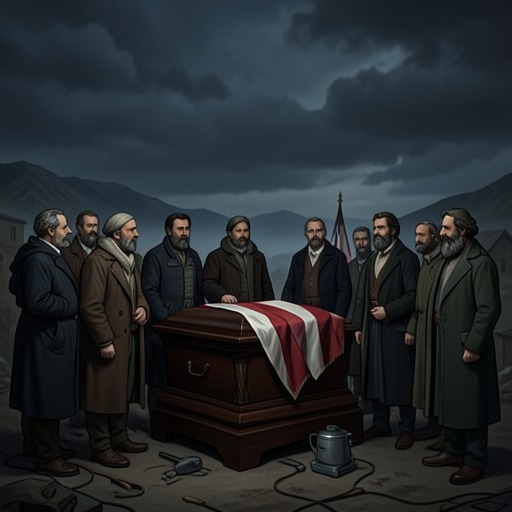
A broad bench was carried from the house into the yard, and Akhtem’s body, wrapped in a green pall embroidered with golden Arabic script, was set on it. The visitors gathered around the stretcher. Sergeyich noticed that the mourners were men, and that he could not see Aisylu or Aisha near the deceased. The imam spoke in a language Sergeyich did not understand; he nevertheless experienced the prayer as something he could feel without needing its words translated. The men bowed their heads toward their open palms and recited their prayer.
Sergeyich followed at the rear of the procession. Friends and neighbours took turns carrying Akhtem’s body on their shoulders, supporting the stretcher with bent arms. At the cemetery, Sergeyich stood between the position of a detached observer and that of someone close to the dead man. He heard Tatar all around him and began to distinguish individual words, though their meanings remained unknown to him. Three men climbed down into the narrow grave and received the body. The ceremony brought Akhtem back into the presence of his community, but Sergeyich’s place at its edge preserved the distance between friendship and belonging.
Return, recognition, and unresolved loss
After the funeral, Aisylu thanked Sergeyich for going to Simferopol: without his effort, she said, Akhtem would not have been returned. His journey had therefore made a concrete difference, even though it had not uncovered what happened after the men were taken or who was responsible for Akhtem’s death. Sergeyich told her that he had not wanted to say earlier that the official he spoke to had called her a widow. That remark had anticipated the truth without confirming it; the body’s return finally made the loss undeniable.
The event also gathers earlier memories into the present mourning. Sergeyich recalls an older village funeral for a man returned from the war in Afghanistan. Then, the village had assembled at the cemetery, but no one had knelt; only the dead man’s mother had tried to fall toward his grave before others held her upright. Remembering that funeral, Sergeyich merges the Afghan War dead man with the soldier killed in the war in Donetsk. The recollection places Akhtem’s burial within a longer history of village grief, while emphasizing the difference between a death publicly mourned and a disappearance that first left a family waiting without reliable information.
Significance
The body’s discovery closes one interval of not knowing but does not supply a full account of the violence. The family had heard a witness’s report of the abduction, confronted official uncertainty, and waited twenty months before Akhtem was returned for burial. His recovery allows the community to mourn him according to its own ceremony; it does not resolve the unanswered questions about his captors, his killing, or the handling of his case.
For Sergeyich, the funeral is at once the recovery of a friend and an encounter with his own limits. He had acted by travelling to seek information, and Aisylu recognizes the importance of that effort. Yet he remains outside the language and rites of the gathering, present at the procession’s rear and standing apart at the grave. The contrast gives the event its particular force: a body can be returned, a funeral can be held, and a friend can help make both possible, while justice and certainty remain out of reach.